





A beautiful party dress should not be a one-afternoon piece, and a favourite jumper should survive far more than one season of playground adventures. That is the practical promise behind sustainable girls clothes: garments chosen with care for how they feel, how they wear and whether they can be loved for longer.
For parents, sustainability is rarely about building a perfect wardrobe. It is about making more considered choices amid growth spurts, school terms, birthday parties and the endless washing basket. The best pieces give girls room to express their style while offering the comfort, quality and versatility that make an investment feel worthwhile.
What sustainable girls clothes really mean
Sustainability in childrenswear is often reduced to one fibre or a single label. In reality, it is a combination of material choices, responsible production, enduring design and a garment's life after it leaves the wardrobe.
A top made from organic cotton may be a thoughtful option, but its overall value also depends on its construction, fit and how often it is worn. If it twists after a few washes, loses its shape or is too precious for everyday life, it is unlikely to earn a long place in the wardrobe. By contrast, a well-made cotton dress, knit or pair of jeans that can be worn repeatedly, passed down or shared with a younger sibling has a far more useful story.
This does not mean every item needs to be neutral, plain or endlessly practical. Children deserve colour, texture and personality in what they wear. The aim is to choose special pieces that are made with enough quality and versatility to become genuine favourites, rather than brief novelties.
Start with fabrics that suit real life
Fabric is the first thing a child notices. It determines whether a waistband pinches, a knit feels itchy or a dress is comfortable enough for a full day of celebration. It also plays a meaningful role in a garment's footprint.
Natural fibres such as cotton, linen and wool are popular for good reason. Cotton is soft, breathable and easy to care for, making it a reliable choice for tees, dresses and everyday layers. Organic cotton can be appealing where available because it is grown to organic standards. Linen is light and airy in warm weather, while wool offers warmth and temperature regulation for winter layers. Many parents looking for eco-friendly girls clothes also value fabrics that feel soft, wash well and last through repeated wear.
There is nuance here. Natural does not automatically mean low impact, and synthetic fibres are not automatically a poor choice. A little elastane can help leggings recover their shape, while recycled polyester may be a sensible, hard-wearing option in outerwear or active pieces. The question is whether the fabric supports the garment's purpose and helps it last.
For a child with sensory sensitivities, softness and seam placement may matter more than the fibre label alone. For a rain jacket worn on wet school runs, weather protection may take priority. Choosing thoughtfully means matching the material to the moments it needs to handle.
Look beyond the fabric name
A considered garment usually reveals itself in the details: fabric with a reassuring weight, tidy stitching, comfortable linings, secure fastenings and shapes that allow movement. Check whether zips glide easily, buttons are firmly attached and waistbands have enough give for a growing child.
Thoughtful construction also affects how a piece ages. Reinforced areas, quality trims and a shape that holds after washing can make the difference between something that is worn often and something that quietly disappears to the back of the drawer.
Choose designs she will want to wear again
The most sustainable item is generally the one that gets plenty of wear. That sounds simple, but it shifts the way a wardrobe comes together. Instead of buying for a single photograph or occasion, consider the styling possibilities around the piece.
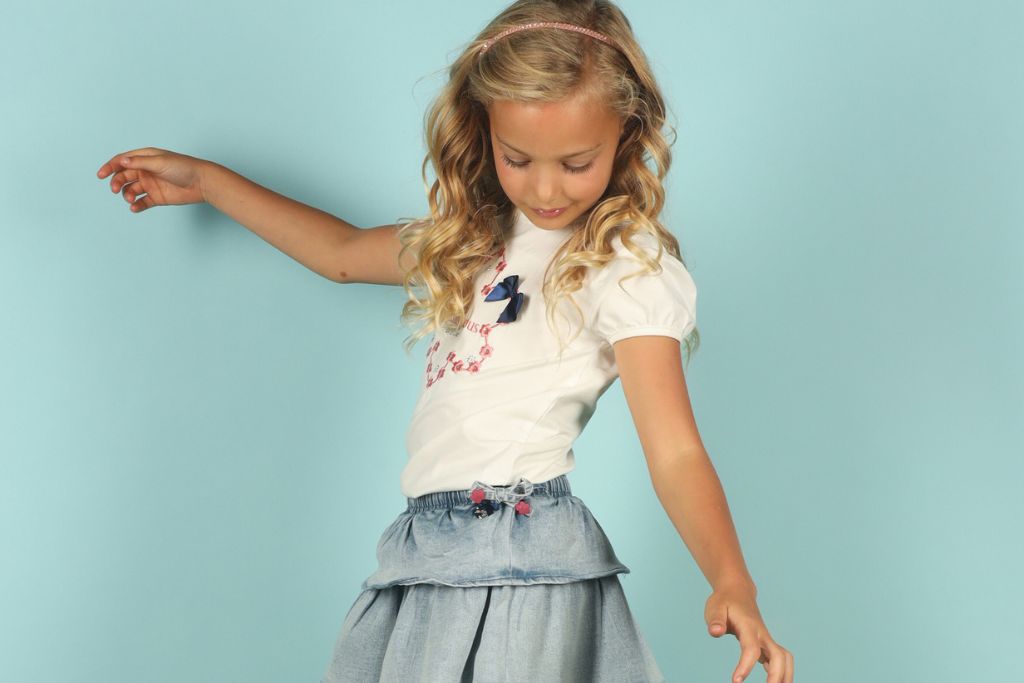
A beautifully cut skirt can work with a relaxed tee for a family lunch, then a fine knit and boots for a winter event. A printed dress may feel special enough for a birthday yet still be comfortable with trainers on the weekend. When girls can choose and style their clothing themselves, they are more likely to reach for it again and again.
This is where boutique curation has real value. A well-chosen collection balances distinctive design with wearable shapes, rather than asking families to choose between fashion and function. Details such as soft jersey linings, adjustable waists, easy layers and considered proportions help a garment fit into real routines.
It is also worth being honest about her preferences. A dramatic tulle skirt may be a wonderful choice for the child who wears it at every opportunity. For another, it may be better as a borrowed occasion piece than a wardrobe purchase. Sustainability is personal when it starts with what a child genuinely enjoys wearing.
Build a smaller wardrobe with more possibilities
A thoughtful wardrobe does not have to be minimal. It simply needs to work hard. Start with a dependable foundation of comfortable tops, quality denim or trousers, layering knits and shoes suited to her usual activities. From there, add dresses, statement jackets, prints and accessories that bring personality.
Colour can make this easier. A few shades that mix naturally allow more outfits from fewer pieces, while one or two standout prints keep the wardrobe feeling fresh. This is particularly helpful for holidays, special occasions and the in-between season when mornings can be chilly and afternoons warm.
When selecting a size, avoid buying so far ahead that the fit feels awkward now. Oversized sleeves that slide into lunch or trousers that need constant pulling up are unlikely to be worn. A little growing room can be useful, especially in knitwear and relaxed silhouettes, but comfort should lead the decision.
For special occasion clothes, think about the return on wear. Could the dress be styled more casually later? Will a tailored jacket work over a skirt, jeans and a simple tee? A memorable piece does not need to be limited to one memorable day.
Care is part of the sustainability story
Even exceptional clothes need considerate care. Following the care label, washing only when needed and choosing cooler washes where appropriate can help protect colour, fibres and shape. Turning printed items inside out before washing and avoiding unnecessary high heat in the dryer can also make a noticeable difference over time.
Treat stains promptly, but do not assume every mark means the end of a garment. A small repair, replacement button or neatly mended seam can extend its life considerably. These small acts are especially worthwhile for well-loved designer pieces with fabric and construction worth preserving.
When an item no longer fits, give it a next chapter where possible. Pass it to siblings or friends, offer it to another family, sell it second-hand or donate it in good condition. Occasionwear, coats and quality knitwear are often especially well suited to being loved again.
Questions to ask before buying sustainable girls clothes
Before adding a piece to the wardrobe, pause over four practical questions. Is it comfortable enough for the way she lives? Is the fabric and finish likely to handle regular wear? Can it be styled with items she already owns? And, when she outgrows it, is it likely to have a life with someone else?
The answers will not always point to the same type of garment. A delicate celebration dress has different demands from everyday denim, and a winter coat should be assessed differently from a summer top. What matters is choosing with intention rather than treating childrenswear as disposable.
At Kids Secret, that balance is central to the edit: designer girlswear with the charm children notice and the quality cues parents value. The most considered wardrobe is not one built overnight. It grows piece by piece, with clothes that feel good, wear beautifully and leave room for a child to simply be a child.
Frequently Asked Questions
What are sustainable girls clothes?
Sustainable girls clothes are garments designed with longevity, quality and responsible materials in mind. They are made to be worn often, cared for well and enjoyed for longer, helping reduce unnecessary waste.
What fabrics are best for sustainable girls clothes?
Organic cotton, cotton, linen, wool and recycled materials are all popular choices. The best fabric depends on how the garment will be worn and whether it offers comfort, durability and easy care.
Are sustainable girls clothes worth buying?
Yes. Sustainable girls clothes can offer better long-term value because they are often made from higher-quality fabrics and designed to last through repeated wear, washing and even hand-me-downs.
How do I build a sustainable wardrobe for my daughter?
Start with versatile everyday basics, quality layering pieces and a few special items that can be styled in different ways. Buying fewer, better-made clothes often creates a more practical wardrobe.
Can sustainable girls clothes still be fashionable?
Absolutely. Sustainable girls clothes come in a wide range of colours, prints and modern designs. Many boutique brands combine stylish looks with quality construction and responsible materials.
How do I care for sustainable girls clothes?
Wash garments according to the care label, use cooler wash cycles where appropriate, avoid unnecessary tumble drying and repair minor damage when possible to extend the life of each piece.
What makes girls clothing more sustainable?
Good-quality fabrics, durable construction, timeless styling and garments that can be worn repeatedly or passed on all contribute to making girls clothing more sustainable.
Can sustainable girls clothes be handed down?
Yes. Well-made sustainable girls clothes are often designed to keep their shape, colour and quality, making them ideal for passing on to siblings, friends or other families.


Leave a comment